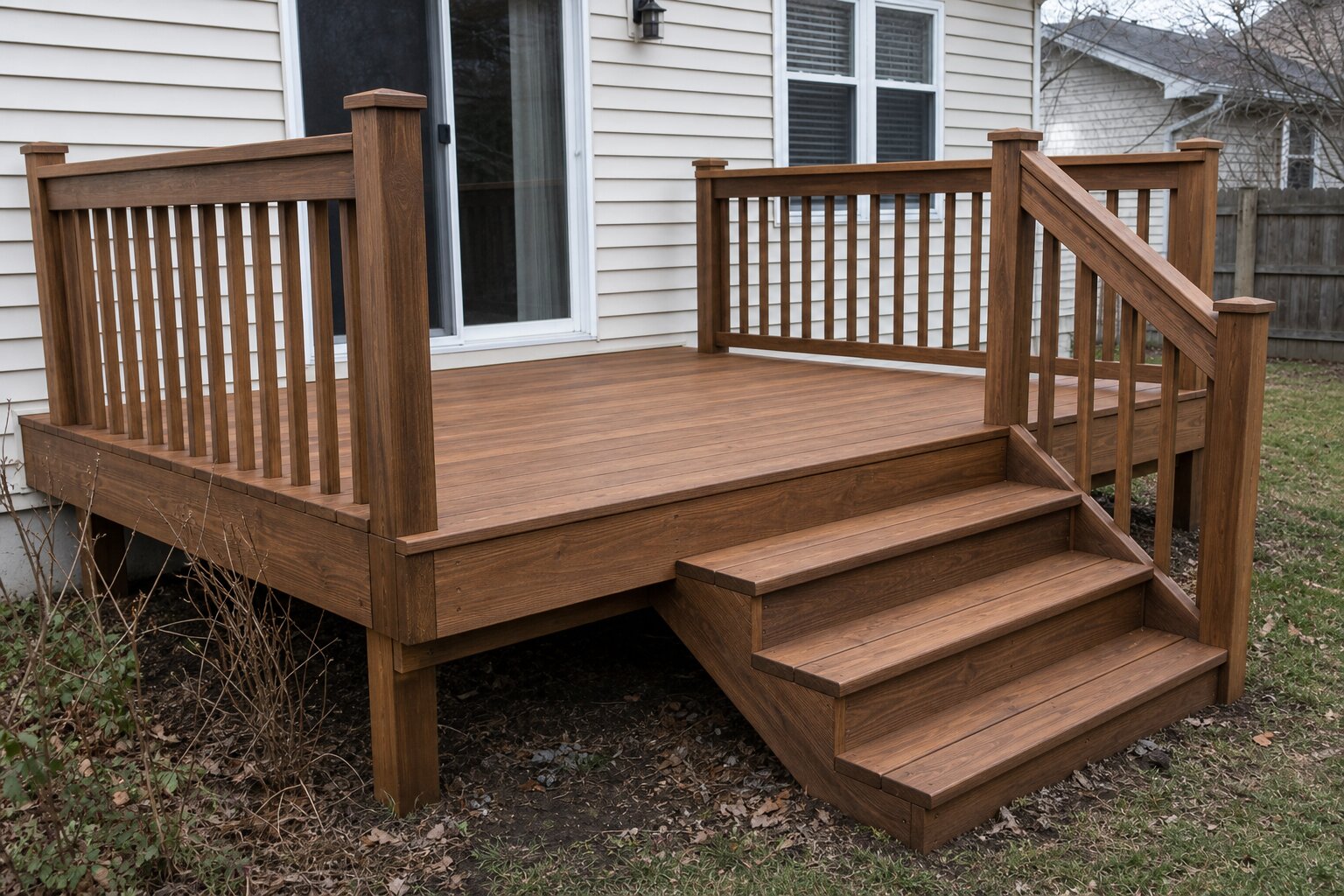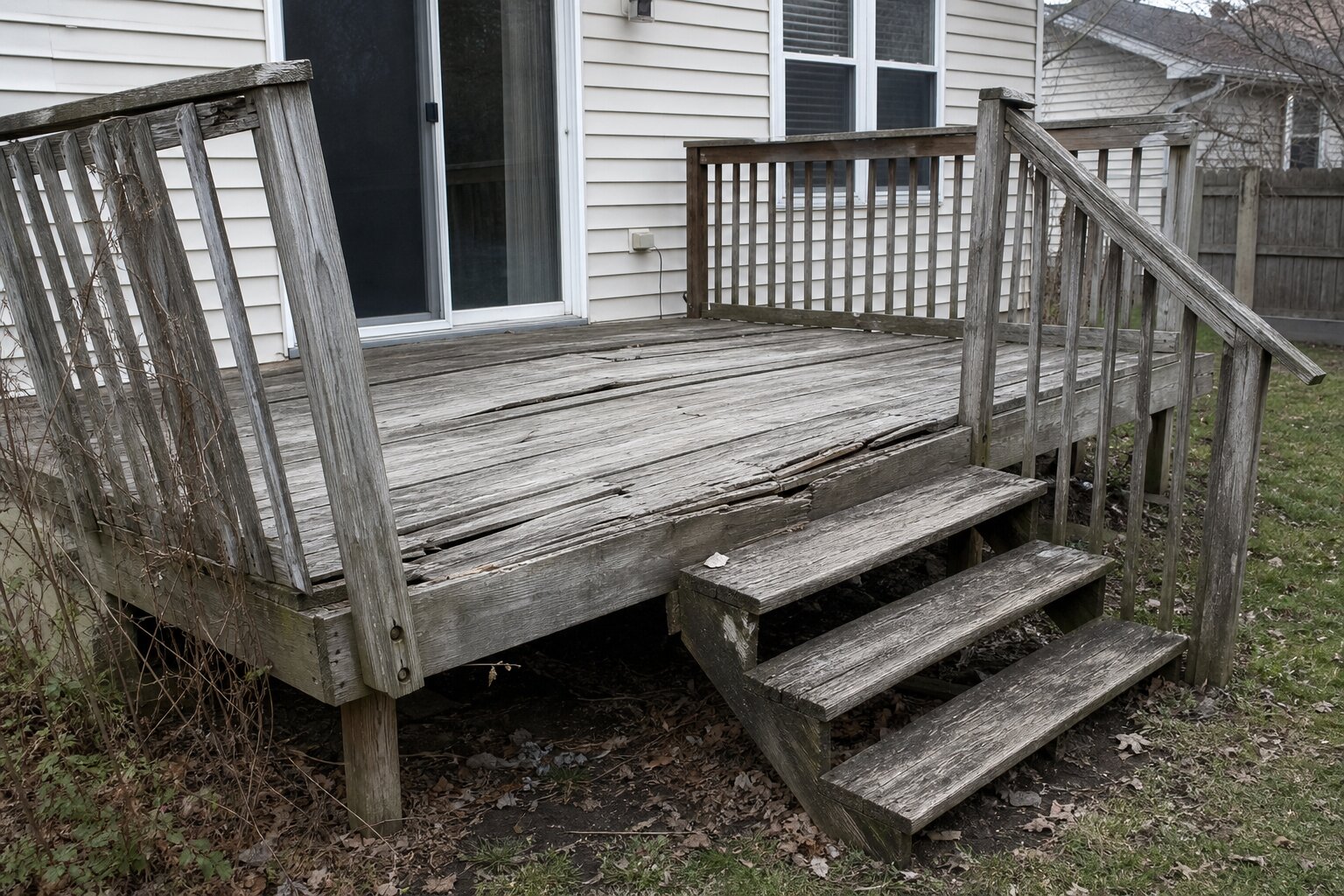
Coastal weather is brutal on decks. Sun bleaches the boards, moisture swells and rots them, and the fasteners and connectors quietly corrode from salt air. Most of the decks we are asked to look at have decent bones with bad boards — and some have boards that look fine over framing that is genuinely unsafe. The first thing we do is crawl under it and tell you which one you have.
What we do
- New deck construction — designed, framed, and built to code
- Full rebuilds on existing footprints
- Board and railing replacement over sound framing
- Stairs — new builds and rebuilds, with proper rise and run
- Porch repair — columns, ceilings, screens, and floors
- Mobile home steps, landings, and ramps
Wood or composite
Pressure-treated pine costs less up front and needs cleaning and sealing every couple of years. Composite costs more on day one and then mostly leaves you alone. Near the water, composite usually wins the ten-year math. Inland, good treated lumber is still a fine answer. We will run both numbers for you.
Common questions
Do I need a permit for a deck?
For most new decks and structural rebuilds, yes. We handle the permit and build to the inspection. Board-for-board replacement on existing framing generally does not need one.
My deck feels bouncy. Is it safe?
Bounce means the framing is undersized, overspanned, or deteriorating. Sometimes the fix is added blocking and posts; sometimes the framing is done. We will look at it and give you a straight answer either way.
How long does a new deck take?
Most residential decks take one to two weeks of build time once the permit is in hand. Weather is the main variable.